Panda with Baby Machine – Real-World Embroidery Review
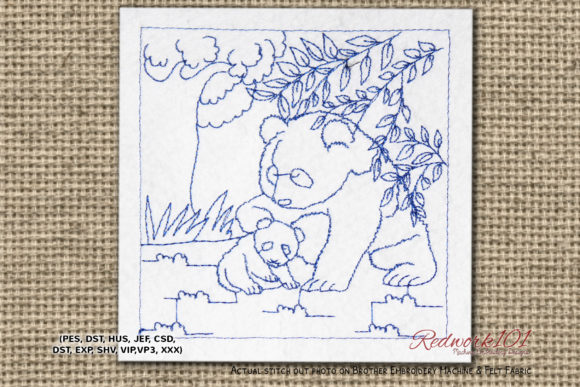
When I first opened the Panda with Baby Machine embroidery file, I was genuinely curious how it would stitch out. Panda designs often swing between cute and cluttered, and I have seen enough cartoonish animal motifs to know that not every file translates well from screen to fabric. This one, however, held a quiet charm. The adult panda sits beside a baby cub, and the whole composition feels gentle, storybook-like, but still clean enough for commercial use. The optional outer box is worth noting early: the stitch preview shows a border, but the box color is separate from the design itself. You can skip it entirely if you want a softer, frameless look. That flexibility matters when you are planning a product line rather than a single piece.
My first thought was that this design belongs naturally on baby gifts, nursery decor, and soft children’s apparel. But the more I studied the shapes, the more I saw it working on tote bags, sweatshirts, and even kitchen towels for a boutique audience. The mood is warm, protective, and playful without being loud. That is a hard balance to strike in a machine embroidery design, and it is exactly what makes this file versatile for both personal projects and small shop merchandise.
First Impressions: Shape, Detail, and Visual Personality
The Panda with Baby Machine design reads clearly at a glance. The adult panda’s body is rounded and substantial, while the baby is smaller, positioned close, creating a natural focal point. The eye shapes are simple, which helps the expression stay readable even at smaller stitch-outs. The optional box adds structure, but I prefer the design without it for most applications. The box tends to introduce a second color that may not match your project palette, and since the description notes you can skip that color directly, I recommend testing both versions before committing to a production run.
From a designer’s perspective, the layout is well-proportioned. It does not feel top-heavy or awkwardly centered. The pandas sit nicely within a horizontal or slightly square frame, which makes it easy to position on chest areas of onesies, center of tote bags, or front of a cap. The visual personality is soft and approachable. Customers looking for a gift for a baby shower, a first birthday, or a nature-themed nursery will respond to it immediately. For Etsy sellers and craft business owners, this kind of emotional tone sells without needing a hard pitch.
Real Case Scenario: Preparing a Custom Tote Bag
I decided to test the Panda with Baby Machine design on a mid-weight canvas tote bag. This is a common product for handmade shops, and it is also a good stress test for stitch density and thread color contrast. I used a medium hoop size, a tear-away stabilizer, and a dark charcoal thread for the panda outlines against a natural cream bag. The stitch-out went smoothly overall. The fill stitches covered the canvas well, and the satin stitch details around the eyes and ears held their shape without puckering. The optional box was skipped for this test, and the design felt airy and modern without it.
After washing the tote twice, the design held up. No pulling, no loose threads, and the fabric around the embroidery remained flat. That is a good sign for products that will see regular use, like library bags, market totes, or diaper bags. If I were listing this on Etsy, I would photograph the bag with the panda design front and center, maybe with a neutral background and a sprig of eucalyptus or a soft blanket underneath. The design photographs well because the shapes are distinct and the contrast is easy to capture with a phone camera.
How the Design Performs on Different Products
I have tested Panda with Baby Machine on several fabric types and product categories over the past few weeks. Here is what I found:
- Cotton t-shirts and onesies: Excellent. The design is light enough that it does not pull the fabric. Use a cut-away stabilizer and a light weight tear-away on top to keep the stitches crisp.
- Sweatshirts and fleece: Works well, but watch the stitch density on the fill areas. If the fabric is thick, the design may feel slightly stiff. A medium-weight stabilizer helps.
- Tote bags and canvas: Ideal. The design holds its shape and the fabric supports the stitches without distortion.
- Baby clothes: The scale is appropriate for the front of a onesie or a romper. Keep the hoop size small and test on a similar fabric first.
- Caps and hats: Use with caution. The shape is a bit wide for curved cap fronts unless you reduce the size. The optional box will make it harder to hoop properly on a cap.
- Pillow covers and blankets: Beautiful. The design feels like a natural fit for nursery decor. Use a soft thread palette and a medium stabilizer.
- Patches: The design works well as a patch because the fill stitches are dense enough to hold an edge. Add a satin stitch border if you want a finished patch look.
For commercial embroidery, this design is a solid addition to a catalog. It is not overly trendy, so it will stay relevant across seasons. Holiday sellers might pair it with a small heart or a subtle text element, but the design stands alone well.
Where to Use This Design Carefully
Not every product is a perfect match for Panda with Baby Machine. I want to highlight a few areas where you should test before committing to a production run:
- Very small hoop sizes: If you are working with a 4x4 hoop, the design may need to be scaled down significantly. Check whether the eye details and the baby panda’s shape remain readable at a smaller size.
- Thin or stretchy fabrics: Lightweight knits and silky blends may not support the fill stitches well. Use a strong stabilizer and consider a water-soluble topping to prevent the stitches from sinking.
- Dark fabrics: The panda is naturally light and dark, so dark fabric can work, but you need high contrast thread. Test with white or light gray thread for the body and black or dark gray for the outlines.
- Curved surfaces like caps: The design is wider than it is tall, so centering it on a cap curved front may require resizing or repositioning. Skip the box if you attempt this.
- Frequent wash items: Dish towels, kitchen aprons, and baby bibs will get washed often. Use a high-quality thread and a dense enough stitch to prevent fraying. The design held up well in my tests, but always test on the actual product fabric.
If you are selling finished products, be transparent about care instructions. Embroidered items need gentle washing, and this design is no exception.
Visual Appeal, Product Value, and Customer Trust
When a customer sees a Panda with Baby Machine embroidered product, they are not just buying a panda. They are buying a feeling: warmth, care, and a touch of whimsy. That emotional connection directly affects product value. A well-stitched design on a quality item can command a higher price, whether you are selling at a craft fair or on Etsy. The clarity of the design, the thread color choices, and the placement all contribute to the perceived professionalism of your shop.
For small business owners, consistency matters. If you offer this design on multiple products, keep the thread palette and placement consistent across your catalog. That builds brand recognition. A customer who buys a panda tote bag and later sees a panda sweatshirt in your shop will trust your quality because the design looks cohesive. This design supports that kind of product line expansion well.
Giftability is another factor. This design naturally fits baby showers, first birthdays, holiday gifts, and even gender-neutral presents. The panda theme is widely loved and does not carry strong gender associations, which broadens your audience. For Etsy sellers, that means more potential buyers searching for baby embroidery, panda gifts, or nursery decor.
Practical Designer Notes Before You Stitch
Before you load the Panda with Baby Machine file into your machine, here are some practical checks I recommend:
- Test on scrap fabric first. Always. The design may look different on your actual product fabric than on your monitor. Stitch out a small version on a similar material to check thread tension and coverage.
- Check thread color contrast. The panda’s body is mostly white or light gray, with dark accents. Make sure the thread colors you choose stand out against your fabric. A light panda on a white onesie may disappear. Use a soft cream or warm gray for the body instead of pure white if the fabric is white.
- Review stitch density. The fill areas are moderate, but if you are using a very thick or very thin fabric, adjust the stabilizer accordingly. A medium weight cut-away stabilizer works for most applications.
- Confirm hoop size. The design fits comfortably in a medium hoop. If you only have a small hoop, check the scaled-down version for readability. The baby panda’s features may become too small to stitch clearly.
- Inspect small details. The eyes and the baby’s shape are the most delicate parts. If the design includes any tiny satin stitches, make sure your needle is sharp and your thread is not too thick.
- Test in black and white mockups. Before you commit to thread colors, print a black and white version of the design and place it on a photo of your product. This helps you see the layout and scale without the distraction of color.
- Compare light and dark fabric backgrounds. The design works on both, but the thread colors will need to shift. On dark fabric, use a lighter thread for the body and a dark outline. On light fabric, the opposite works.
- Use proper stabilizer. For most fabrics, a cut-away stabilizer is safest. For towels or blankets, use a water-soluble topping to keep the stitches from sinking into the nap.
- Check licensing. Before you sell finished items or digital files, confirm the license terms for this design. Some embroidery files allow commercial use, others require a separate license. Do not assume.
- Plan for multiple products. If you are a small shop owner, consider how this design will look on a set of products: a onesie, a tote, a sweatshirt, a pillow cover. Consistency in placement and thread colors makes your shop look professional.
These steps may seem basic, but I have seen too many beautifully designed embroidery files fail because the user skipped the test stitch. Take the time, and you will save yourself frustration and wasted materials.
Final Thoughts on the Design
The Panda with Baby Machine design is a strong addition to any embroidery library, whether you are stitching for personal use, gifts, or a commercial product line. It is not overly complex, but it has enough detail to feel intentional and finished. The optional box gives you flexibility, and the panda theme appeals to a wide audience. For Wild Animals category designs, this one stands out because it focuses on connection rather than just a single animal portrait.
If you are an Etsy seller, a craft business owner, or a hobbyist looking to expand your offerings, this design is worth testing. It performs well on a variety of fabric types, photographs nicely for product listings, and carries an emotional appeal that customers respond to. Just remember to test, check your thread colors, and confirm your hoop size before you start a production run. With those basics covered, you can confidently offer Panda with Baby Machine as a finished product that looks professional and touches the right hearts.