Muslim Man Bluework: Real Talk for Stitchers
I pulled up the Muslim Man Bluework file this morning, and I’ll be honest—I always take a moment before stitching a religious or cultural design. It needs to land right. It needs to feel respectful, well-executed, and appropriate for the product it’s going on. This one immediately read as a thoughtful, versatile piece. The description mentions it’s technically redwork, but the title leans into the bluework tradition, and that single-color, classic illustration style is exactly what I look for when I want a clean, meaningful machine embroidery design that works across multiple product types.
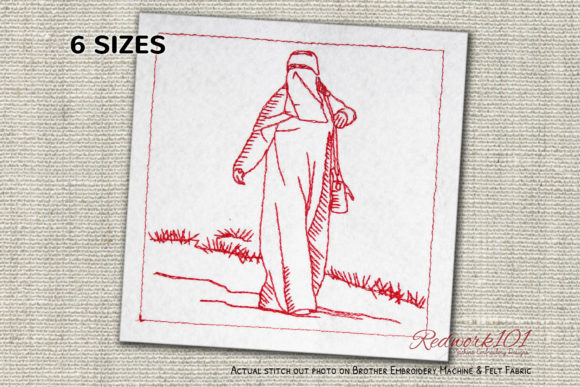
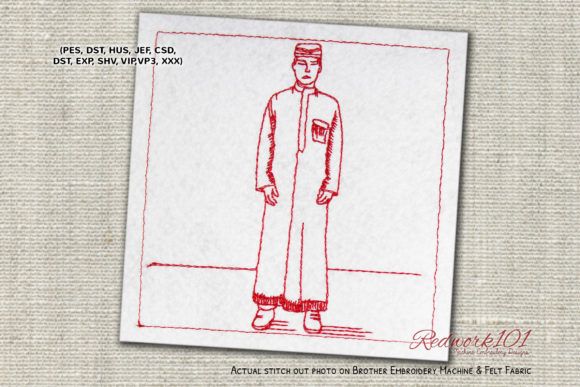
There’s also an optional box stitch framing the figure. The description notes that the outer box is a different color than the main design, and that you can skip it. That little detail alone makes this embroidery file more flexible than it first appears. Before I even loaded it onto my machine, I was already planning two different product variations from one single file.
First Look at the Muslim Man Bluework Design
The first impression is calm and centered. The figure is composed in a way that reads clearly at a glance, which is essential for any custom apparel or handmade product destined for a shelf or a gift box. The style avoids the trap of being too stiff or too cartoonish. It lands in a sweet spot where it feels like a classic illustration, which gives it a timeless quality. Because this design falls under the Religion category, it carries a specific weight and meaning. The visual personality here is dignified and approachable, making it a strong candidate for both personal projects and commercial product lines.
From a thread management perspective, a single-color design is a gift to anyone running a craft business. Whether you stock a deep navy, a soft sky blue, or a classic black, the Muslim Man Bluework design allows you to stitch out consistent, high-quality finished products without constant thread changes. That efficiency matters when you are an Etsy seller or a small shop owner trying to balance quality with production speed.
From Tote Bags to Sweatshirts: A Real Project Test
I ran this design through a couple of real project scenarios to see how it actually performs. The first project was a custom tote bag for a client. I wanted a clean, frameless look, so I skipped the optional box stitch. The design sat directly on the canvas, and the fill stitch held up beautifully without any gaps. The tote bag felt like a premium, thoughtful product. The second project was a cozy sweatshirt for a family order. Here, I used the box stitch in a contrasting charcoal thread. The frame gave the finished product a structured, medallion-like appearance that elevated the entire garment. Having the option to include or exclude the frame is a huge practical advantage for anyone designing for a diverse customer base.
Apparel and Soft Goods
This machine embroidery design works well on sweatshirts, t-shirts, baby clothes, and even lightweight jackets. Because it is a fill stitch and satin stitch design, you need to pay attention to your stabilizer. On a sweatshirt, a medium-weight cut-away stabilizer is your best friend. It will prevent the stitches from sinking into the fabric texture and distorting over time. On a t-shirt, a tear-away stabilizer can work if the stitch density is not too high, but I always recommend testing on a scrap piece first. The design’s single-color nature also makes it an excellent candidate for an embroidered patch. You can stitch it out on felt, cut it close to the edge, and attach it to a cap or a backpack.
Home Decor and Gifts
For home decor, the Muslim Man Bluework design shines on pillow covers, tea towels, and framed hoops. The centered composition makes it a natural focal point for nursery decor or living room accents. As a personalized gift, it carries a lot of sentimental value. I can see this being used for wedding gifts, holiday gifts, or Aqiqah celebrations. The key here is fabric texture. A smooth linen or cotton broadcloth will capture the fine details of the design much better than a heavily textured fabric. If you are selling these as boutique products, the quality of the fabric and the clarity of the stitch-out will directly impact your customer trust and your brand consistency.
Where to Use This Design Carefully
No design is perfect for every situation, and being honest about limitations is what separates a professional designer from a hobbyist. Here are a few areas where I recommend caution with the Muslim Man Bluework design:
- Small Hoop Sizes and Tiny Items: If the design is sized for a 4x4 hoop, it might be too detailed to shrink down further for a tiny baby onesie or a cuff. Check the file dimensions before you resize. Maintaining the integrity of the figure is important.
- Curved Surfaces Like Caps: The optional box stitch can be tricky on a curved surface. The square frame might distort if the cap is not hooped perfectly. If you are using the box stitch, a stiff cut-away stabilizer and a cap hoop are essential. If you are skipping the box stitch, the design is much more forgiving on curves.
- Dark Fabric and Thread Contrast: Because this is a single-color design, contrast is everything. A dark blue thread on a navy fabric will disappear. Test your thread colors on the actual fabric you plan to use. A light blue or white thread on a dark heather grey or black fabric creates a stunning, modern look.
- Stitch Density and Fabric Texture: If the stitch density is high, the design can become stiff and heavy on thin fabrics. If the density is too low, the fill stitches might leave gaps and look patchy. Always run a test stitch-out on scrap fabric before you commit to a final product. This is a non-negotiable step in any embroidery project.
- Frequent Washing: For items like baby clothes or kitchen towels that will be washed often, use a high-quality cut-away stabilizer and a robust thread. The fill stitch and satin stitch areas need to be secure enough to withstand repeated washing without fraying or pulling.
Practical Workflow Notes for the Muslim Man Bluework
Before you load this embroidery file into your machine and start selling finished products, there are a few workflow steps I recommend taking. These are the habits that keep a craft business running smoothly and prevent expensive mistakes.
Check the Stitch Count and Density. The product description does not list the exact stitch count, so you need to verify it in your embroidery software. Look for areas where the fill stitch might be too dense. If the density is high, use a smaller needle and a high-quality thread to prevent breaks.
Select the Right Stabilizer. For a structured item like a tote bag, a tear-away stabilizer is acceptable. For a sweatshirt or a t-shirt, use a cut-away stabilizer. This is especially important for commercial embroidery where the product needs to hold up over time. A poor stabilizer choice can ruin the visual appeal of the entire design.
Test the Optional Box Stitch. The description mentions that the box stitch is a different color from the main design. This is a fantastic feature, but it requires planning. If you skip the box stitch, make sure the edges of the design are clean and the fill stitch is solid. If you include it, test the thread color combination. A contrasting box stitch can make the design pop, but a matching box stitch can create a subtle, elegant frame.
Use Printable Mockups for Your Etsy Listings. If you are a digital product seller or a handmade shop owner, your customers need to see the design in context. Create a printable mockup of the Muslim Man Bluework design on a tote bag, a sweatshirt, and a framed hoop. Show both variations—with the box stitch and without. This builds buyer confidence and helps your Etsy listing stand out in a crowded marketplace.
Confirm Licensing Before Selling. This is a critical step for any commercial embroidery project. The design falls under the Religion category and is a digital embroidery file. Check the license terms carefully. Are you allowed to sell the finished product? Are you allowed to use it on print-on-demand platforms? Knowing the legal boundaries protects your business and your reputation as a creative entrepreneur.
Final Thoughts on the Muslim Man Bluework Design
After testing this design on a tote bag, a sweatshirt, and a framed hoop, I can confidently say it is a valuable asset for any embroidery designer, small business owner, or Etsy seller. The single-color execution is efficient, the optional box stitch adds flexibility, and the respectful, clear illustration style makes it suitable for a wide range of products—from personalized gifts to boutique merchandise.
The key to success with this design is preparation. Test your fabric, your stabilizer, and your thread colors. Decide whether the box stitch fits your product vision. Check the stitch density and confirm your commercial embroidery licensing. When you take those steps, the Muslim Man Bluework design delivers a clean, professional finish that your customers will trust and appreciate. It is a thoughtful addition to any digital product library, and it has earned a permanent place in my project rotation for custom apparel and handmade gifts.