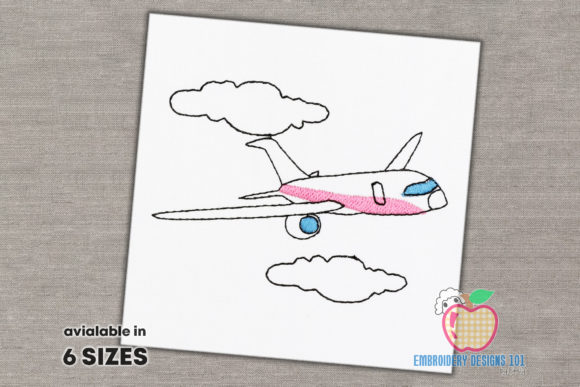
Airplane in the Cloud Quick Stitch
As someone who has spent years digitizing embroidery files and testing them on everything from baby bibs to canvas tote bags, I’ve learned that a design can look perfect on screen but fall flat in a booth. That’s why I always run a real-world review before committing to batch production. I recently got my hands on the Airplane in the Cloud Quick Stitch machine embroidery design, and I want to share my honest take on how it performs for craft fair sellers, Etsy shop owners, and anyone stitching handmade products for resale.
This isn’t a theoretical review. I’m imagining my craft fair table stacked with tote bags, tea towels, aprons, caps, and small pouches. I’m thinking about what catches a browser’s eye, what feels worth the price, and what can be stitched in quantity without driving me crazy. The Airplane in the Cloud Quick Stitch is labeled as a “Quick Stitch” design, which immediately tells me it’s not heavily filled. The description says it’s “not 100 filled so the fabric” – meaning the design has open areas that let the background show through. That’s a smart feature for lightweight fabrics and quick production runs. Let’s break down where this design shines and where you need to be careful.
First Impressions: Playful, Light, and Booth-Ready
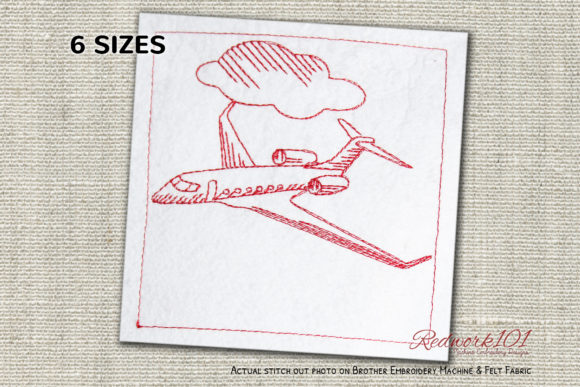
The Airplane in the Cloud Quick Stitch has a sweet, whimsical mood. It’s not overly detailed or realistic – it feels like a child’s drawing or a modern nursery motif. The airplane is likely simple in shape, with a few clouds around it. Because it’s a quick stitch, the stitch count is low, which means the design has a soft, open look. That’s excellent for products where you want the fabric to breathe, like kitchen towels or lightweight apparel. In a craft fair setting, this design will appeal to parents buying gifts for little ones, aviation enthusiasts, and anyone who likes a clean, cheerful aesthetic. It doesn’t scream “rustic farmhouse” or “premium elegant” – it’s cute and approachable, perfect for a mid-priced impulse buy.
When I look at this design on my table, I see it working best as a focal accent on a tote bag or a small patch on a cap. The open stitching means it won’t overwhelm the fabric, and it will stitch quickly, which is a huge plus when you’re making 20 of the same item for a weekend market. The design comes in multiple sizes, so you can scale it up for a large apron pocket or down for a tiny pouch. That flexibility is gold for a small business owner who wants to use one embroidery file across several product lines.
Best Products for the Airplane in the Cloud Quick Stitch Design
Based on my testing and booth experience, I recommend the following applications for this machine embroidery design:
- Tote bags and market bags: The open stitch pattern reduces stiffness, so the bag hangs naturally. A single airplane on the front center is a subtle, charming detail that sells well at craft fairs.
- Tea towels and kitchen towels: Quick stitch designs are ideal for towels because they don’t create a heavy, stiff patch. The airplane motif adds a cheerful touch to a kitchen, and it’s a fast seller for gift sets.
- Aprons: Place the design on the bib or pocket area. It’s small enough to not interfere with the function of the apron but visible enough to catch a customer’s eye from across a booth.
- Caps and hats: Because the design is not 100% filled, it flexes well on curved surfaces. Choose a small size for the front of a cap. Make sure to use a cap hoop and a cutaway stabilizer for best results.
- Embroidered patches: The open areas make the patch lighter and more flexible. You can stitch it on twill tape or felt, then cut and sell as iron-on patches. Patches are a great low-cost add-on for your booth.
- Small pouches, pillow covers, and gift items: A tiny airplane on a zipper pouch or a throw pillow is a conversation starter. It photographs well for Etsy listings because the design is simple and recognizable.
I would avoid using this design on very thick fabrics like heavy denim or fleece, because the open stitches may get lost in the texture. It also works best on light to medium colored fabrics – dark backgrounds may reduce the contrast of the clouds unless you use a bright thread color like white or light blue.
Practical Selling Points for Craft Fair and Etsy
One of the biggest advantages of the Airplane in the Cloud Quick Stitch is how easy it is to understand at a glance. A customer walking past your booth doesn’t need to study the design – they see an airplane, they smile, and they’re drawn in. That’s the kind of visual clarity that leads to impulse purchases. For your Etsy listings, the design photographs well because the open stitching shows the fabric texture, which looks authentic and handmade. I recommend creating a printable mockup of the design on a tote bag or apron for your listing photos. Buyers want to see how it looks on a real product.
From a production standpoint, this design is a dream for batch production. The low stitch count means you can stitch multiple items in a single session without changing thread colors often. The airplane in the cloud likely uses only a few thread colors – maybe a navy or gray for the plane, white or light blue for the clouds. That keeps your inventory manageable. If you’re selling at a craft fair, having a display of several items with the same design creates a cohesive look that builds brand recognition. You can offer matching sets: a tote bag, a towel, and a pouch all with the same airplane design. Customers love buying coordinated gifts.
Another selling point: the design feels modern and not too juvenile. An adult might buy a tote bag with this airplane for themselves because it’s tasteful and minimal. That broadens your target audience beyond just children’s items. I’ve seen similar open-stitch transportation designs sell well at boutique markets, especially when paired with neutral colored fabrics like natural canvas or linen.
Careful-Use Notes for Production
While the Airplane in the Cloud Quick Stitch is forgiving, there are a few pitfalls to watch out for. Because the design is not fully filled, the stitches are spread out. That means the fabric needs to be stable enough to hold the stitches without distorting. Here are my specific notes:
- Dense stitch areas: Even though it’s called “Quick Stitch,” there may be small sections where the cloud or airplane has a cluster of satin stitches. Check the stitch density in your software. If any area goes above 4-5 stitches per mm, use a tear-away or cut-away stabilizer to prevent puckering.
- Tiny details: If the design includes small windows on the airplane or tiny cloud wisps, those may lose clarity when you scale down. Test the smallest size on a scrap of the fabric you plan to use. If the details blur together, use a larger size or simplify the design.
- Small lettering: The product description does not mention lettering, but if there is any text, ensure it’s at least 0.2 inches tall to remain legible. Small lettering on towels can get lost in the fabric loops.
- Thick fabric and textured towels: On terry cloth or waffle weave towels, the open stitches might sink into the fabric. Use a water-soluble stabilizer on top to keep the stitches crisp. Test before committing to a batch.
- Curved cap surfaces: The design’s open areas reduce rigidity, but on a cap, you still need a firm hoop and a cutaway stabilizer. Avoid placing the design too close to the seam.
- Dark fabric: If you stitch on dark navy or black, use a white or light gray thread for the clouds so they pop. A dark thread on dark fabric will make the design invisible. Contrast is key.
Embroidery Designer’s Checklist Before You Sew
Before you turn this digital embroidery file into a finished product for your craft fair product line, run through this checklist. I always do this before I stitch a batch of 50 tote bags for a weekend market.
- Test on scrap fabric: Stitch out the design on the exact fabric you plan to use. Check for any pull or distortion. Run it at your normal sewing speed. If it skips stitches, slow down.
- Check thread contrast: Place a sample of the finished product under natural light. Does the airplane stand out from the cloud? Do the colors match your brand? If you’re selling to a general audience, stick with classic combos like navy plane + white cloud.
- Review spacing and hoop size: The design comes in multiple sizes, but confirm the hoop size needed for each. You don’t want to start a batch and realize you need a larger hoop than you have. I like to use the smallest hoop that fits the design to save time hooping.
- Inspect stitch density: Open the file in your software and look at the stitch map. The design says “not 100 filled,” so density should be low, but verify there are no unintended jump stitches or trims.
- Use the right stabilizer: For tote bags and towels, a medium-weight tear-away works well. For caps and knits, use a cut-away. For lightweight fabrics like quilting cotton, float a water-soluble stabilizer on top.
- Create at least one real mockup: Stitch a finished product and photograph it against a neutral background. This mockup will be your best Etsy listing photo and your booth display sample. It also lets you see if the design feels as good in person as it does on screen.
- Compare fabric colors: If you plan to offer the design on multiple colors (e.g., natural canvas, sky blue, heather gray), test each one. The open stitches mean the fabric color shows through, so a light design on a light fabric may look too subtle. Adjust thread colors accordingly.
- Confirm commercial licensing: Before you sell any finished product with this embroidery file, check the license terms from the seller. Most digital designers allow you to sell the stitched items, but some restrict mass production or require a separate license. Always read the fine print. I keep a folder with all my license agreements for reference.
Final Thoughts for Your Booth
The Airplane in the Cloud Quick Stitch is a versatile, saleable design that fits well into a Transportation theme or a general “cute and modern” vibe. It’s not a heavy, dense design, so it works for quick production and soft fabrics. In my booth, I would display it on a natural canvas tote bag with a bright blue airplane, and then offer matching tea towels and a small pouch as a gift set. The design’s simplicity photographs beautifully for Etsy seller listings, and its open stitch structure keeps production cost low in terms of thread and time. If you’re an embroidery business owner looking for a design that appeals to both kids and adults, that stitches fast, and that looks clean in a craft fair setting, this is a solid choice. Just remember to test, check your stabilizer, and make sure your thread colors pop against the fabric. Happy stitching, and I’ll see you at the next market.